Text and Captions By Jeffrey A. Rendall; Photos By Jeffrey A. Rendall
SOUTHWESTERN, US – As we’re all aware of here in the Mid-Atlantic, golf is seasonal. True, we can play pretty much year-round if temperatures permit, but most prefer to hit the links between April 1st and Mid-November. The rest is the ‘shoulder’ or winter seasons, where you might be able to sneak in a round or two if there isn’t snow on the ground (and you’re willing to put up with muddy playing conditions and cold hands).
That’s not the case in the Southwestern US, where the sun shines warm most or all of the year, and there’s no frozen precipitation to crystallize the fairways. It’s no secret why the PGA Tour spends a month and a half in California and Arizona before heading east and north as the flowers start to bloom.
The southwest is also where many of us cold weather folks head to take a vacation and play some golf during the ‘off’ season. Having grown up in California, I head west every Thanksgiving to play in the Palm Springs area, or as it’s known out there, the low desert or Coachella Valley.
Though the daytime temperatures are usually in the 60’s at that time, it feels like a heat wave compared to the alternative. And because there aren’t any deciduous trees, the landscape starkly contrasts the pale gray color we’re stuck with for five months a year.
Desert golf is a good share different than most of the layouts in the Mid-Atlantic -- where you’ll find some target-oriented local courses routed through wetlands and marsh -- but most golf in our region is undulating and parkland style, carved through hardwoods and pine.
In the desert, the nature of the land plays a much smaller role in determining the golf holes, relying instead on the imagination of the respective golf course designer at any one location. You will see some elevation changes, but by and large, the land’s flatter and somewhat featureless (unless you’re up in the hills, of course). And during the ‘high’ season (late fall, winter and early spring in most cases), you’ll contend with over-seeded rye fairways and bentgrass greens. Desert golf’s Bermuda surfaces grow lush in the hot weather months, but the cool season grasses grow just as well in their time of year.
You’ll also pay for the privileges of sunshine – the high-end resort golf courses carry price tags that would cause un-suspecting Mid-Atlantic golfers to cry out in pain. Perhaps a bit of an overstatement, but for comparable pricing (to our regional courses), you’ll need to think about playing at twilight during the week.
But you’ll get value for the dollar – desert golf can be very beautiful. Here’s some of what we saw in Palm Desert and Indio, California (and one short trip to Las Vegas, Nevada). For full reviews of the courses presented here, check the links below:
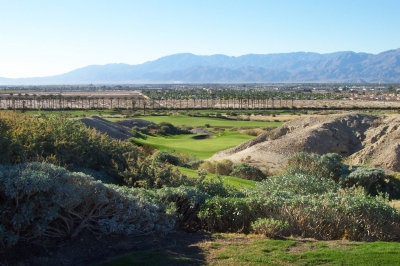 |
| Landmark Golf Club in Indio, California, hosted four Skins' Game competitions from 1999-2002. It's got a lot of golf hole variety as well as scenic beauty - perfect for TV cameras. |
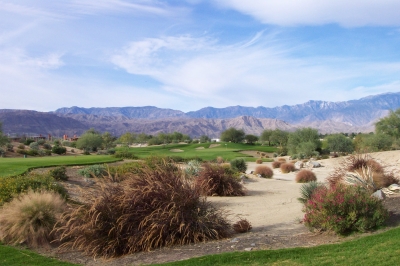 |
| Desert Willow Golf Club in Palm Desert, California, was once featured on the cover of Smithsonian Magazine - not for golf, but because of its incorporation of natural desert vegetation into the two golf layouts there. |
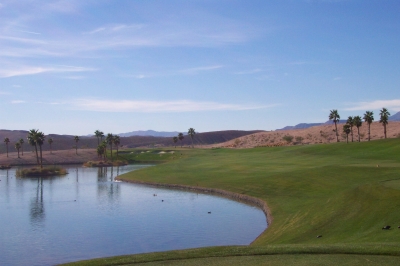 |
| Bear's Best in Las Vegas features 18 of Jack Nicklaus's favorite golf holes from courses he's designed all over the west. Ironically, there are only two holes with water - the 1st, pictured here, and the 18th hole. |
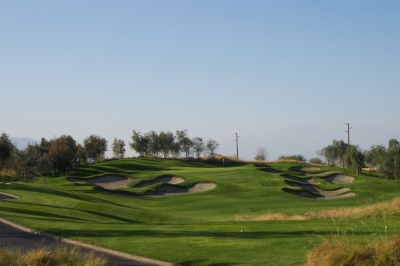 |
| Nick Faldo designed Shadow Ridge (in Palm Desert) to look like famous Australian courses, with large sand bunkers and native grasses. There's plenty of lush green grass, too. |
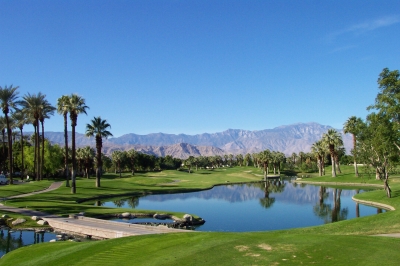 |
| Marriott's Desert Springs (Palms Course, in Palm Desert) features 'waterscapes' and breathtaking views of the surrounding mountains. |
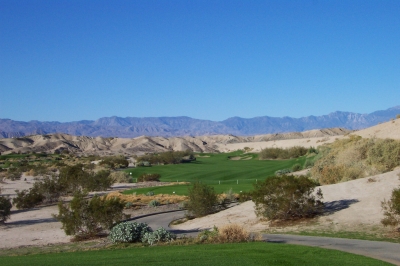 |
| Landmark's (North) par five 6th hole is a good example of desert golf's target nature. Fortunately, if you end up off the grass, it's still playable in many situations. |
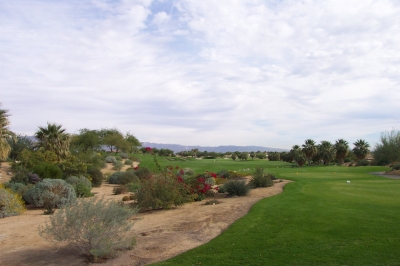 |
| Desert Willow's natural desert vegetation shows there's something other than cacti and scrub in the desert environment - there are flowering plants, too. |
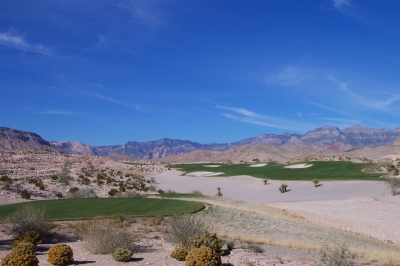 |
| The beauty of Bear's Best demonstrates why Las Vegas is becoming known for something other than gambling. As part of an upscale housing development, it also proves people want to take up residence here, as well. |
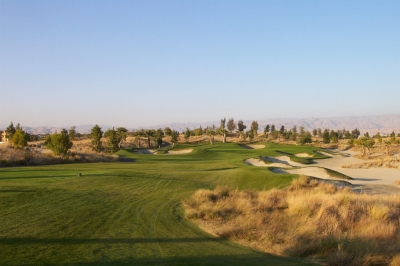 |
| Shadow Ridge is one of the desert area's newest golf courses, but it's got a very mature look. Stay out of the sand, and you can score here. |
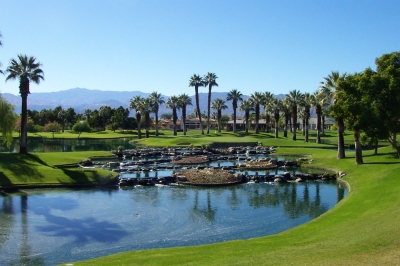 |
| Desert Springs' (Palms Course) 17th hole is one you'll certainly remember. It's one of those rare opportunities to lose a ball in several different ponds on the same hole. |
Details:
If you like what you see, try booking a trip out west:
Desert
Phone:(760) 346-7060; Toll Free: (800) 320-3323
FAX: (760) 346-7444
Landmark Golf Club (North):
Phone: (760) 775-2000
FAX: (760) 775-1988
Bear’s Best (
Phone: (702) 804-8500
FAX: (702) 804-1127
Marriott Desert Springs Resort (Palms Course)
Phone: (760) 341-2211
FAX: (760) 341-1756
Marriott Shadow Ridge Resort
Phone: (760) 674-2700
FAX: (760) 674-2710
| Related Links | Comments on this article? | |
|
Maryland National Golf Club Hollow Creek Golf Club Rocky Gap Resort PB Dye Golf Club in Ijamsville Whiskey Creek Golf Club |
E-mail Jeff Rendall, Editor: jrendall@golftheunitedstates.com |